- Innovative Packtech
- Sep 04, 2025
Expanding Market Driven by Convenience and Lifestyle Demand
The global stick-pack packaging machine market was valued at approximately USD 416 billion in 2024 and is projected to reach around USD 668 billion by 2032, growing at a CAGR of 6.1%. Growth is being fueled by rising demand for single-serve, on-the-go packaging in food, pharma, cosmetics, and nutraceuticals. Consumers today seek convenience, precise portioning, and lightweight format—ideal applications for multi-lane stick-pack machines.
Pharma Industry: Safety, Dosing, and Sustainability
Within the pharmaceutical sector, flexible packaging—including stick packs—is gaining ground, particularly in single-dose formats. The global flexible pharma packaging market is valued at approximately USD 16 billion, with a projected growth rate of 6.5% per year through 2028. Stick packs offer tamper-evident, high barrier properties and compactness—perfect for unit-dose medicines and supplements.
Moreover, stick-pack machines for food and pharma combined are projected to grow from around USD 1.86 billion in 2024 to USD 3.5 billion by 2035—that’s a CAGR of roughly 5.9%. In this mix, nutraceutical packaging is a fast-growing segment, expected to double—from USD 0.2 billion in 2024 to USD 0.4 billion by 2035..
Asia-Pacific: Epicentre of Growth and Adoption
The Asia-Pacific region leads global demand for stick-pack machines (~36–41% market share), driven by rising middle class, industrial expansion, and booming food and pharma production in India and China.
In Japan, pharmaceutical and nutraceutical applications are projected to account for over 43% of stick packaging by 2035. Meanwhile, in India, the packaging market is expected to grow at a CAGR of 6.7%, supported by its role as “Pharmacy of the World” and the growing nutraceutical sector.
Multi-Lane Machines: Productivity Meets Precision
Multi-lane stick-pack machines currently command about 60% of the market, thanks to their high-speed capabilities and scalability. Systems with 4–10 lanes are most common today, while ultra-wide configurations (>20 lanes) are growing rapidly (~8.9% CAGR) for large-scale operations.
Health, Automation, & Sustainability: Key Market Drivers
Health & Wellness – Growing consumer focus on health, vitamins, supplements, and precision dosing makes stick-packs especially appealing.
Technological Advancements – Automation, IoT, and smart controls enhance speed, fill accuracy, and flexibility in machine operation.
Eco-friendly Packaging – With sustainability a growing concern, manufacturers are turning to recyclable and compostable films, driven by regulation and consumer preferences. Stick packs reduce material use by 30–40%.
Challenges and Considerations
High Capital Cost – The upfront investment for high-capacity machines can be prohibitive for SMEs.
Regulatory Complexity – Compliance with packaging safety, environmental, and material standards can slow implementation.
Material Waste Concerns – Single-use stick packs are efficient but raise sustainability concerns unless recyclable materials are used.
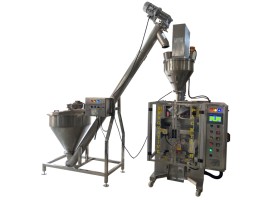
If you want to make your industrial packaging work fast and accurate then you must have to go for automatic machines. By using automatic packaging machines, your packaging works will become smoother.
Follow us on:
Copyright © 2024 Innovative Packtech | All Rights Reserved
